freyaseo1
Introduction
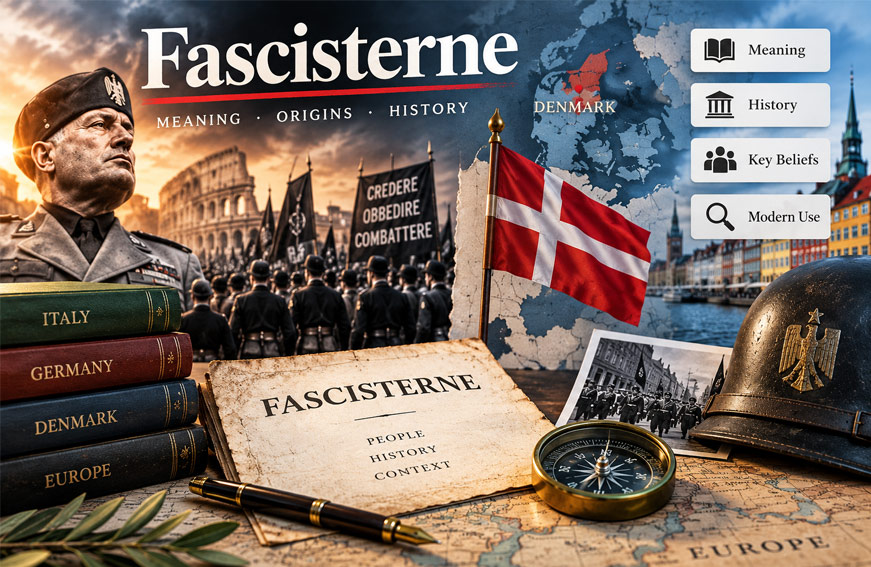
There are words that have meaning and value more than what they look like on the page, and “fascisterne” is one of them. The term is new to you and you may have been searching for its meaning without quite knowing where it originated from, you are not alone. It seems out of the ordinary for English readers and this is sufficient to make people pause and look back for an explanation. Here I want to deconstruct and demystify the word, discuss the language it’s from, and discuss the very deep history that comes with it.
I’m trying not to be dramatic here, just clear and factual. Fascisterne has a lot of issues discussed in the most studied and debated pages of modern history, so it requires a careful and grounded explanation. At the end you should have a good understanding of the meaning of the word, its significance and how it is used and interpreted now.
What the Word Actually Means
The word “Fascisterne” is Scandinavian, and in Danish and Norwegian means “the fascists.” Splitting it up makes logic easily understood. The root element “fascist” is common to many languages, and the ending “-erne” is a definite plural ending in Danish and Norwegian. In those languages, the same ending makes “fascists” mean “the fascists”—the group, not the concept.
When someone refers to fascisterne, they refer to a clearly delineated group of people that they have called fascists, typically in a historical, political or journalistic context. Well, it is just the same word, plural definite, but in Scandinavian grammar. Recognising that a lot of the confusion the word can cause to English speakers is removed by understanding the small grammatical detail.
The origins of the idea of fascism.
The meaning of “fascisterne” can be understood only through an understanding of fascism. Fascism is a political movement and ideology that emerged in Europe in the early 20th century, and was most prominent in Italy during the rule of Mussolini and in a slightly different form in Germany. The term itself comes from the Italian word “fascio” which means “bundle”, a symbol of strength in unity.
The essence of fascism is authoritarianism, extreme nationalism, repression of political opposition and an emphasis on the state or nation rather than the individual. It was one that opposed liberal democracy, frequently advocated a single strong leader, sought to control the people and sometimes resorted to fear or force to silence them—historian’s terms. These are not desirable characteristics and that’s why the term is so serious and weighty when it’s used.
How the Term relates to History
In Scandinavian usage “fascisterne” is most likely to be used in reference to the 1930s and 1940s when fascist movements extended throughout much of Europe. The word would have national connotations in Denmark and Norway because both nations experienced the Second World War and the occupation it brought.
For writers, historians and educators in Denmark and Norway, the term “fascisterne” is used for groups and individuals who adopted fascist thinking during that time. It can mean the foreign occupiers, movements of this country that were sympathetic to fascism, or the political actors of the day. For obvious reasons, the word isn’t used frivolously serious Scandinavian writing. It embodies occupation, rebellion, and bitter truths that ensued.
The Word Still Matters Today
It’s hard not to ask the question, “Why does this 20th century term still exist today?” It is not that fascism was never a question of the past. It remains a subject of study, debate and warning to people because each generation is feeling the lessons of it. The reason terms such as “fascisterne” can be found in books, documentaries, news articles and classroom debates is because societies are keen to remember what has occurred and not to repeat it.
The term “fascist”—along with its forms in other languages—is also used in a more general way in contemporary political discourse, sometimes as a pejorative rather than descriptive term. It’s worth noting that use is more loose, as it can make the meaning of the term more obscure. If not used properly, word loses some of its meaning. It is important to know the true definition of history so you can distinguish between history and a heated exaggeration.
Reading the Word in Context
Context is everything, as “fascisterne” can be found in a variety of places. When you see it in a history book or in a museum exhibit, it’s almost always a reference to real-life fascist organizations from the past. If it appears in a contemporary opinion piece in a newspaper or on the Internet, it might be deployed more rhetorically, to attack an opponent with biting criticism.
My tip for when you see the word: read the other sentences around it. Who the speaker referring to? Which time period you referring to? Does the author provide an interpretation of the past or make an explicit allegation? The clues give you the correct way to read the term. This is a language in which the words are heavy with history, and one has to read carefully to enjoy it.
Responding to the Topic Approaching the Topic Responsibly
Topics connected with fascism are topics that must be treated with respect and care: topics that are connected to real suffering and important consequences in history. If this is for school or for writing, or just for fun, I would suggest using trusted sources to research “fascisterne“. Well-known history books, schools and trusted encyclopedias provide you with a balanced and accurate history.
With this subject, be a little skeptical about random statements that you hear online, as there is a lot of opinion and sometimes even misinformation. Don’t just rely on single credible source for honest understanding. It’s not just about being accurate, it’s about respecting the history and the people who suffered through it.
Conclusion
But ‘fascisterne’ is a Scandinavian term, easily understood grammatically, ‘the fascists’ but which leads to a much broader and deeper topic. It is connected directly with the history of fascism in the 20th century Europe and the memories that the countries such as Denmark and Norway have of it. The word not casual and when one understands the word, one understands language and the big history behind it.
Even if you’ve heard term in a history class, in a newspaper article or on the Internet, the same approach applies: take the time to read it in context; use good sources; and treat it properly for what it is. That makes it easier to wrap your mind around a foreign word, adds to a wealth knowledge and makes you think about, and be informed about, an important moment in history.
Read More: Hb Seo Service